



A Christmas cactus can have lush green stems and look perfectly healthy in November, yet show no sign of the colorful flowers you’re hoping to see during the holidays. The problem may have little to do with the plant’s overall health. Christmas cacti need specific light and temperature conditions to form flower buds, and even small changes in their autumn environment can affect when they bloom.
By November, many Christmas cactus owners begin checking the tips of their plants for tiny developing buds. Some are rewarded with the first signs of pink, red, or white flowers, while others find nothing but healthy green segments. If the plant has been sitting in the same spot for months, the lack of flowers can be particularly frustrating.
The explanation often lies in what happened during the preceding weeks. Holiday cacti respond to shorter days, longer nights, and cooler conditions. Too much artificial light after sunset, consistently warm rooms, or changes in the plant’s surroundings can interfere with flower-bud formation.
For plants that have already developed buds, the priorities are different. Rather than trying to encourage more growth, November care should focus on maintaining the conditions that allow those delicate buds to develop and eventually open.
READ: How to Help Christmas Cactus to Bloom in Winter – 5 Tricks You May Not Know
Is It Really a Christmas Cactus?
Before changing the plant’s care routine, it’s worth checking which type of holiday cactus you actually have.
Many plants sold under the name Christmas cactus are Thanksgiving cacti. Both belong to the genus Schlumbergera, but they differ in their stem shapes and typical flowering periods.
The Thanksgiving cactus, Schlumbergera truncata, usually has pointed, claw-like projections along the edges of its flattened stem segments. The true Christmas cactus, commonly classified as Schlumbergera × buckleyi, generally has smoother, more rounded or scalloped segments.
Thanksgiving cacti often begin blooming earlier in the season, sometimes during November, while true Christmas cacti generally flower closer to December.
A plant beginning to bloom before Christmas is therefore not necessarily reacting to unusual conditions. It may simply be following the natural flowering schedule of its particular variety.
The University of Minnesota Extension explains that holiday cacti typically require several weeks of suitable short-day conditions before they produce flowers. This means that the absence of visible buds in early November does not automatically indicate a problem.

The Light and Temperature Conditions That Encourage Christmas Cactus Buds
One of the most important factors in Christmas cactus flowering is the length of the night.
Holiday cacti are short-day plants, meaning their flower-bud development is influenced by extended periods of darkness. According to Iowa State University Extension, many varieties need approximately 14–16 hours of uninterrupted darkness, although some cultivars can form buds with shorter dark periods.
A Christmas cactus placed on a windowsill may receive plenty of natural darkness after sunset. Yet if the room is brightly lit throughout the evening, artificial light can interrupt the plant’s response to the changing season.
Lamps, overhead lighting, and other indoor light sources may interfere with the dark period needed by sensitive varieties.
If your Christmas cactus has no buds, consider whether it receives bright indirect daylight followed by reliably dark nights. Keeping the plant in a suitable location is generally preferable to moving it repeatedly between rooms.
Temperature is another important factor. Iowa State University Extension recommends cool autumn conditions of approximately 55–65°F (13–18°C) to encourage flowering.
Some holiday cacti can form buds under sufficiently cool conditions even when the day length is not ideal.
The process takes time. If the plant only begins receiving suitable conditions in November, its flowering period may arrive later than expected.
READ: How to Have Your Christmas Cactus Bloom on the Holidays
How Much Should You Water a Christmas Cactus in November?
Despite its name, a Christmas cactus does not have the same watering requirements as a typical desert cactus.
Holiday cacti originate from humid forest environments, where moisture is more readily available. Their roots still need good drainage, and keeping the potting mix constantly wet can cause problems.
Rather than following a fixed weekly schedule, check the upper layer of the soil before watering. When it feels dry, water thoroughly and allow the excess to drain from the pot.
Do not leave the plant standing in a saucer filled with water. Prolonged waterlogging can damage the roots and affect the plant’s ability to support healthy growth and flowering.
As indoor temperatures become cooler during autumn, the potting mix may take longer to dry. A watering routine that worked during summer may therefore provide too much moisture in November.
Once buds have appeared, avoid allowing the root zone to become excessively dry. Sudden changes in moisture levels can contribute to bud loss, particularly when combined with temperature fluctuations or other environmental stress.
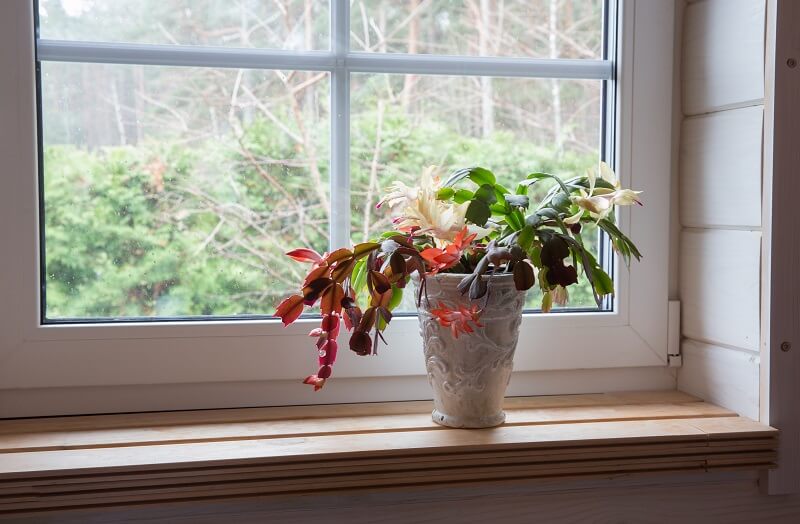
What to Do When Your Christmas Cactus Starts Growing Flower Buds
The first flower buds usually appear at the ends of the flattened green stem segments. Initially, they may look like tiny colored points before gradually becoming longer and more recognizable.
Once these buds appear, keeping the plant’s surroundings stable becomes especially important.
Choose a location with bright indirect light, away from hot radiators, cold drafts, and sudden temperature changes. Avoid unnecessary repotting, heavy pruning, or repeatedly moving the pot while the buds are developing.
A plant that has recently been brought home from a shop may be particularly sensitive to changes in its environment. The light, temperature, and watering conditions in a greenhouse or garden center can differ considerably from those inside a heated home.
There is also no need to apply a large amount of fertilizer in an attempt to force the flowers to open. Holiday cacti are generally fertilized during active growth rather than given heavy feeding during the late-autumn flowering stage.
For a plant that already has healthy buds, consistent watering, suitable light, and stable temperatures are more useful than making several changes at once.
READ: Winter Houseplant Care: 10 Simple Changes That Help Indoor Plants Stay Healthy
Why Christmas Cactus Buds Fall Off Before Opening
Few things are more disappointing than seeing a Christmas cactus finally produce buds, only to watch them drop before the flowers open.
Bud loss can have several causes, including sudden changes in temperature, excessive indoor heat, irregular watering, unsuitable lighting, or problems with the roots.
A plant positioned above a radiator may be exposed to warmer, drier air than the rest of the room. One standing near a frequently opened door may experience repeated cold drafts.
If the potting mix remains wet for long periods, inspect the drainage holes and check whether excess water can escape. Consistently saturated soil can interfere with normal root function.
On the other hand, allowing the plant to become severely dry while buds are developing may also create stress.
If the stems begin to soften or show discoloration, or the potting mix develops an unpleasant smell, the problem may involve unhealthy roots rather than flowering conditions alone.
For a Christmas cactus that remains healthy but still has no buds in November, checking nighttime temperatures and the length of uninterrupted darkness can help identify what is missing from its autumn routine.
A plant that has received insufficient darkness or consistently warm conditions may simply need several more weeks under suitable conditions before flower buds become visible.